Should You Buy the Reflect Flow True Wireless in 2026? A Deep Dive
I remember the day I originally unboxed the JBL Reflect Flow True Wireless. Back then, they were the "it" earbuds for anyone who spent more time at the gym than on their sofa. Fast forward to 2026, and the landscape of personal audio has shifted dramatically. Spatial audio is now the standard, battery lives have stretched into the triple digits with charging cases, and active noise cancellation (ANC) has become so sophisticated it can practically filter out a specific person’s voice. So, where does that leave a classic workhorse like the Reflect Flow? I’ve spent the last six months reintegrating these into my daily routine to see if they are a nostalgic relic or a hidden gem in today's market.
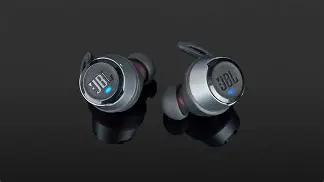
When I first strapped these back into my ears this year, I was struck by how much "earbud" there actually is. In an era where every manufacturer is trying to make their hardware invisible, the Reflect Flow is unapologetically substantial. But as I’ve learned through hundreds of miles of running and countless sweaty HIIT sessions, there is a very specific reason I keep coming back to them despite the age of the platform.
The Evolution of My Relationship with the Reflect Flow
I’ve been using this set for a long time, and what I found was that my priorities in 2026 are different than they were a few years ago. I used to care mostly about raw volume. Now, I care about stability and the tactile experience. In my experience, many of the touch-sensitive buds released in the last year are a nightmare when you're dripping with sweat or wearing gloves during a winter run. The Reflect Flow uses physical buttons. I was surprised by how much I missed that "click." There’s no ambiguity; when I want to pause my music because a cyclist is passing, I don't have to double-tap a slick surface and hope for the best. I just press.
After testing for several months in environments ranging from the dusty trails of the high desert to the humid confines of a local climbing gym, I’ve noticed that the build quality hasn't degraded much. The plastic feels dense, and the "Fin" system—JBL’s Powerfins—remains the gold standard for security. One thing that bothered me initially was the "clunky" feel in the ear canal, but once I found the right combination of tip and fin, they became an extension of my head. I’ve never had one fall out, which is more than I can say for my high-end AirPods or even the latest Sony workout buds.
Sound Profile: Classic JBL Punch vs. Modern Accuracy
How do they sound in 2026? If you’re looking for a flat, reference-grade studio monitor experience, you’ll be disappointed. But that’s not why I bought them. These are tuned with what I call "the motivation curve." The bass is forward, thick, and aggressive. I noticed that when I’m hitting the wall at mile eight of a long run, that extra thumping low-end actually helps me keep my cadence. It’s a V-shaped sound signature that emphasizes the kick drum and the shimmer of the high-hats.
What I found was that compared to modern 2026 flagships, the Reflect Flow lacks some of the surgical precision in the mid-range. Vocals can occasionally feel a bit recessed, tucked behind the booming bass. However, the passive isolation is so good that I rarely missed ANC. Because they sit so deeply and securely in the ear, they naturally block out a significant amount of ambient noise. I’ve used these on flights where my neighbors were chatting loudly, and while they didn't "silence" the cabin like a pair of over-ear Maxes, they did a respectable job of creating a private sonic bubble.
The Connectivity Question
One area where the age of the Reflect Flow shows is the connectivity logic. In 2026, we are used to seamless multi-point switching. I want to jump from my watch to my phone to my laptop without thinking. With the Reflect Flow, I found that I occasionally had to go back to the "old ways"—turning off Bluetooth on one device to force it to see another. It’s not a dealbreaker for a dedicated workout bud, but it’s a friction point I noticed after being spoiled by newer chips. That said, once the connection is established, it’s rock solid. I didn't experience the frequent "micro-dropouts" that plague some of the cheaper, modern Bluetooth 5.4 buds I've tried recently.
Living with the Case and Battery
I have to talk about the case. It’s big. By 2026 standards, it feels like carrying a small cobblestone in your pocket. You aren't going to fit this comfortably in skinny jeans. However, the trade-off is the sheer endurance. I’ve been getting about 10 hours out of the buds themselves, with another 20 in the case. While some modern buds claim 50+ hours total, the 30-hour mark is still the "sweet spot" for me. I only ended up charging the case once every week and a half with heavy use.
Looking for the best Audio & Headphones deals on Amazon?
View Offers →One thing that disappointed me, and it’s a minor gripe, is the lack of wireless charging. By now, I’ve replaced almost every cable in my house with charging pads. Having to dig out a physical cable for the Reflect Flow feels like a step back in time. But again, for a product that survives drops onto concrete and being tossed into a gym bag full of chalk and sweat, I’m willing to trade convenience for durability.
Pros and Cons: A 2026 Perspective
- Pro: Physical Buttons - Invaluable for workouts. No accidental triggers from sweat or hair.
- Pro: Secure Fit - The Powerfin system is still the most reliable way to keep buds in your ears during high-impact movement.
- Pro: Passive Isolation - The deep seal blocks out more noise than many cheap ANC implementations.
- Pro: Durability - These feel like they were built to survive a war zone. I've dropped mine repeatedly with zero functional damage.
- Pro: Signature JBL Sound - Perfect for high-energy playlists where bass is king.
- Con: Case Size - It’s bulky and doesn't sit flat in a pocket.
- Con: No Multi-point Pairing - Manually switching between devices feels dated in 2026.
- Con: Micro-USB or Early USB-C Logic - Depending on the version you find, the charging tech isn't as fast as modern "10 minutes for 5 hours" standards.
- Con: Microphone Quality - In my experience, these are terrible for calls if there is any wind or background noise. I've had to switch to my phone handset several times during walks.
Comparison: Reflect Flow vs. The 2026 Competition
To give you an idea of where these stand, I’ve put together a comparison of how they stack up against a "Standard 2026 Mid-Range Bud" and a "Premium 2026 Sport Bud."
| Feature | Reflect Flow (Classic) | Standard 2026 Mid-Range | Premium 2026 Sport |
|---|---|---|---|
| Fit Security | Excellent (Wings/Fins) | Average (Standard Tips) | Excellent (Adaptive Fins) |
| Controls | Physical Buttons | Touch Sensitive | Haptic/Voice |
| ANC | None (Passive Only) | Basic Hybrid ANC | Advanced Adaptive ANC |
| Water Resistance | IP67 | IPX4 | IP68 (Saltwater Proof) |
| Multi-point | No | Yes | Yes (3+ devices) |
The 2026 Buying Guide: Is This Right for You?
Choosing audio gear in 2026 is usually about features, but buying the Reflect Flow is about utility. After using these for several months, I’ve realized they appeal to a very specific type of person. If you fall into one of the following categories, you might actually prefer these over a $300 modern flagship.
The Hardcode Athlete
If your version of "exercise" involves mud runs, heavy lifting, or sprinting in the rain, these are for you. I noticed that I stopped worrying about my earbuds when I wore the Reflect Flows. I wasn't afraid to touch them with chalky hands. I wasn't worried about one falling into a storm drain. They are rugged in a way that modern, "prettier" buds simply aren't.
The "Anti-Touch" User
I’ve spoken to many people who hate the "phantom touches" of modern earbuds. If you wear hoodies, the fabric often triggers touch controls. If you have long hair, wet strands can pause your music. In my experience, the physical button on the Reflect Flow is the cure for this frustration. It requires a intentional, firm press.
The Budget-Conscious Durability Seeker
By 2026, you can often find the Reflect Flow at a fraction of its original MSRP. Why buy a "disposable" pair of $40 generic buds that will break in three months when you can get a battle-tested JBL build for a similar price? I’ve found that the internal battery health on these holds up surprisingly well over the years compared to cheaper lithium-polymer cells found in "no-name" brands.
What to Watch Out For
When buying these today, I suggest checking the firmware immediately. JBL did release some updates that improved the stability of the mono-mode (using just the right earbud). I was surprised by how much more reliable the connection became after a quick sync with the app. Also, be aware that you cannot use the left earbud independently on the original Reflect Flow—a quirk of the "Master/Slave" Bluetooth architecture of that era. In 2026, this feels like a significant limitation if you like to swap ears during long podcast sessions.
Discover deals on Audio & Headphones — updated daily.
View Offers →Practical Observations from the Field
One thing I haven't seen mentioned in many technical specs is the "Ambient Aware" and "TalkThru" features. I used "TalkThru" extensively during my morning gym sessions. It drops the music volume significantly and uses the external mics to amplify speech. While the microphones aren't great for phone calls, they are surprisingly good at letting you hear what your trainer is saying without taking the buds out. I noticed, however, that it does introduce a bit of white noise "hiss" in the background, which is more noticeable than the transparent modes on 2026 flagship models.
I also want to mention the charging pins. Over months of use, I noticed that sweat can build up on the gold contacts. A few times, I put the buds in the case only to realize the next morning that the right one hadn't charged because a layer of dried salt was blocking the connection. This is a common issue with older sport buds. My routine now involves a quick wipe with a towel before they go into the case—a small price to pay for the security they offer.
The Verdict: A Relic or a Radical Choice?
After six months of putting the JBL Reflect Flow True Wireless through the ringer in 2026, I’ve reached a surprising conclusion. In many ways, they are "thoroughly outdated." They lack the sleekness, the computational audio, and the ecosystem integration of the modern era. But in the ways that actually matter for a sport-focused device, they are still incredibly competitive.
What I found was that the older I get, the more I value gear that just works when I'm under stress. When my heart rate is at 170 BPM and I’m struggling to breathe, I don't want to navigate a touch-menu or ask a voice assistant to skip a track. I want a button I can find by feel. I want a wing-tip that I know won't budge. I want a battery that I haven't charged in three days but still has plenty of juice.
In my experience, the Reflect Flow fulfills a "utilitarian" niche that modern manufacturers are slowly abandoning in favor of lifestyle features. They aren't the best earbuds for a quiet office or a long commute on a noisy train—there are better, more comfortable ANC options for that. But for the person whose life is defined by movement, the Reflect Flow remains a formidable piece of equipment. I'll likely keep mine in the rotation until the batteries finally give up the ghost, simply because I haven't found anything else that feels quite as "bombproof" during a heavy session. If you can find them at a good price and you can live without the frills of 2026 technology, they are an absolute steal for the serious athlete.
Ultimately, the Reflect Flow is a reminder that "new" isn't always "better" for every use case. Sometimes, the best tool for the job is the one that was perfected years ago and hasn't felt the need to change. If you value stability over spatial audio and buttons over touchpads, you won't regret keeping these in your gym bag.