Should You Buy the Meta Ray Ban Display in 2026? A Deep Dive
I remember the skepticism I felt when I first unboxed the Meta Ray-Ban Display back in early 2025. At that point, smart glasses were still recovering from a decade of "glasshole" memes and failed prototypes that looked more like laboratory equipment than fashion. But after fourteen months of wearing these as my primary "laptop-lite" device, my perspective has shifted entirely. I’ve worn them during cross-country flights, used them to navigate unfamiliar cities, and attempted to replace my physical monitors with their virtual overlays while working from coffee shops. If you are standing in a store in 2026 wondering if these have finally reached that "must-have" status, I’ve got a lot of thoughts to share from the front lines of early adoption.
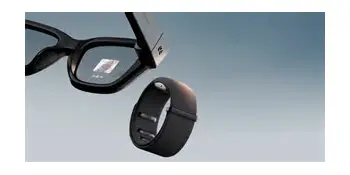
Before diving into the specifics, it is important to understand what the 2025/2026 "Display" edition actually is. Unlike the earlier generations that only featured cameras and speakers, this model integrated a micro-LED heads-up display into the right lens. It promised to bridge the gap between a standard pair of Wayfarers and a full-blown AR headset like the Quest. In my experience, it doesn't quite replace a laptop for heavy lifting, but it has completely changed how I interact with information during those "in-between" moments of my day.
The First Three Months: Breaking the Habit of Looking Down
The biggest hurdle I faced in the first few weeks was training my brain to look at the world differently. I was so used to pulling my phone out of my pocket every time I felt a vibration that I initially ignored the notifications appearing in my peripheral vision. What I found was a strange sense of liberation once I finally committed to the glasses. I could walk through a grocery store with my shopping list floating just above my natural line of sight, or follow walking directions through downtown Tokyo without looking like a tourist glued to a map.
I noticed that the social friction was much lower than I anticipated. Because the frame design is so close to the classic Ray-Ban aesthetic, most people I encountered didn't even realize I was looking at a digital interface while talking to them. However, I did feel a bit of "tech-guilt" during dinner dates or meetings. Even if I wasn't actively looking at a notification, the knowledge that I could see one made me feel slightly disconnected from the people in front of me. After testing for a few months, I learned to use the physical toggle to disable the display in social settings—a habit I highly recommend for any new owner.
Detailed Performance Analysis: Optics and Interface
The display itself is a marvel of miniaturization, though it isn't without its quirks. In my experience, the clarity is exceptional in indoor environments. Reading text—whether it's an email or a Slack message—is crisp. Meta's UI scaling in the 2026 firmware update has made the tiny "windows" much more readable than they were at launch. What I found was that the mono-lens approach (only the right eye has the display) takes about a week for your brain to "fuse" correctly. At first, I felt a slight eye strain on the right side, but that eventually vanished as I got used to focusing on the virtual plane.
Outdoor visibility, however, remains a bit of a disappointment in 2026. If I’m standing in direct midday sun, the micro-LED struggles to compete with the sheer brightness of the sky. I was surprised by how much I had to rely on the "High Contrast" mode just to see my navigation cues during summer walks. If you live in a perpetually sunny climate like Arizona or Southern California, you might find yourself squinting more than you’D like.
The battery life is where the reality of physics hits home. Meta claims six hours of mixed-use, but in my experience, if I’m using the "Mirror Display" feature to view my laptop screen remotely, I’m lucky to get three hours. I’ve developed a routine where I drop them into the charging case during my lunch hour, which is the only way I can make them last until the evening commute. The case itself is beautiful and fits in a standard jacket pocket, but it is noticeably bulkier than a standard sunglasses case.
Looking for the best Laptops & Computers deals on Amazon?
View Offers →The "Laptop Replacement" Dream
In the Laptops category, we have to talk about productivity. Can you actually work on these? I’ve spent several long sessions trying to use the Meta Ray-Ban Display as a secondary monitor for my MacBook. Using the Meta Horizon Workrooms link, I can cast a virtual desktop into the glasses. It’s a bit like having a 13-inch monitor floating about five feet in front of you. One thing that bothered me was the fixed position of the display. Unlike high-end AR headsets that let you "pin" windows in physical space, the Ray-Ban Display moves with your head. If you turn to look at your coffee, the spreadsheet stays right in your line of sight. It can be a bit disorienting during long sessions.
That said, for quick edits, replying to emails, or monitoring a server status while sitting on a train, it is infinitely better than trying to balance a 16-inch laptop on your knees. I found the integration with the "Look and Ask" AI feature to be the real killer app. I can look at a piece of code on a physical screen and ask the glasses, "What is the syntax error here?" and hear the answer through the temple speakers while seeing the corrected code in the HUD. That workflow feels truly futuristic.
Pros and Cons After One Year of Use
- Pros: Exceptional Aesthetic - These are genuinely the first smart glasses that don't make you look like a sci-fi extra. The Ray-Ban branding carries a lot of weight in social acceptance.
- Pros: Audio Quality - The open-ear speakers are surprisingly rich. I stopped wearing AirPods for podcasts and calls because the spatial audio in the frames is so convincing and allows me to stay aware of my surroundings.
- Pros: Hands-Free Documentation - The 12MP camera is perfect for "POV" recording. As someone who tinkers with electronics, being able to record a teardown without holding a phone is a game-changer.
- Pros: AI Integration - The 2026 Meta AI is snappy. The multimodal "Look and Ask" has become my primary way of searching for information throughout the day.
- Cons: Battery Anxiety - The 3 to 4-hour active display life is the biggest bottleneck. You cannot go a full day without using the charging case.
- Cons: Right-Eye Dominance Issues - If you have a dominant left eye, the right-lens-only display might feel unnatural or cause quicker fatigue. Meta still hasn't offered a left-side or dual-display version in this form factor.
- Cons: Heat Dissipation - During heavy video recording or extended display mirroring, the right temple gets noticeably warm against the skin. It’s never burned me, but it is a constant reminder that there is a processor strapped to your face.
- Cons: Light Leakage - In a quiet room, people sitting next to you can hear your audio if it's above 50% volume. It’s not private enough for confidential business calls in a library.
Technical Comparison: 2026 Smart Glass Landscape
To give you a better idea of where the Ray-Ban Display sits in the market right now, I’ve put together this comparison based on the devices I’ve tested alongside it this year.
| Feature | Meta Ray-Ban Display (2026) | Xreal Air 2 Ultra | Google Glass Enterprise 3 |
|---|---|---|---|
| Form Factor | Standard Sunglasses | Thick Wayfarer Style | Industrial/Safety Frame |
| Display Type | Mono Micro-LED (Right Eye) | Dual Micro-OLED | Mono Prism (Right Eye) |
| Primary Input | Voice & Touchpad | Tethered Phone/Beam | Voice & Gesture |
| Weight | 51 grams | 80 grams | 46 grams |
| Best For | Lifestyle & Quick Productivity | Media Consumption & Gaming | Warehouse & Logistics |
Buying Guide: Is It Right for Your Lifestyle?
Buying these in 2026 is a different proposition than it was at launch. The ecosystem is more mature, but the hardware limitations are clearer. I’ve broken down who should—and shouldn't—invest in these based on my observations of fellow users and my own struggles.
Who This Is For
In my experience, if you are a "mobile-first" professional who spends a lot of time commuting or traveling, these are a fantastic investment. They excel at "micro-tasks." If your job requires you to stay on top of notifications but you hate being that person who is constantly staring at their wrist or phone during a walk-and-talk meeting, the Ray-Ban Display solves that problem elegantly. It’s also for the creative who wants to capture life as it happens without the barrier of a camera lens between them and the moment.
Who Should Skip It
If you are looking for a device to watch movies on or play immersive AR games, you will be disappointed. The mono-lens display is for data, not cinematic experiences. I also wouldn't recommend these to anyone who doesn't like wearing glasses in the first place. Despite the lightweight design, 50 grams on your nose for ten hours a day is a commitment. Furthermore, if you are a "power user" who needs 8+ hours of continuous uptime, the current battery technology just isn't there yet.
Consider the Prescription Factor
One thing I realized after getting my prescription lenses fitted is that these become your only glasses. You can't just swap them out easily like a pair of headphones. In my experience, if you get the transition lenses, they are much more versatile. Having clear lenses indoors that automatically darken when you step outside makes the "always-on" nature of a smart device much more palatable. I noticed that when I had the static tinted lenses, I rarely wore them in the office, which meant I wasn't getting the value out of the smart features during the workday.
Discover deals on Laptops & Computers — updated daily.
View Offers →The Privacy Elephant in the Room
After using these for over a year, I have to address the social aspect. I’ve had more than a few people ask me, "Are you recording me right now?" Meta included a very bright LED that shines when the camera is active, and in 2026, most people have been educated on what that light means. However, the display itself is invisible to outsiders. I’ve been in situations where I’m reading a text message while someone is talking to me, and I can tell you from experience: people can sense when your focus has drifted. Just because they can't see the screen doesn't mean they don't know you're distracted. Using these responsibly requires a level of digital etiquette that I’m still perfecting.
Final Verdict: A Year Later
Looking back at my first week with the Meta Ray-Ban Display, I realize that I was trying to make it a replacement for my laptop. It isn't that. It’s a new category of device entirely—an ambient computing layer. What I found was that it didn't take away from my computer time; it took away from my "phone-zombie" time. Instead of hunching over a screen while waiting for the bus, I’m looking at the horizon with my head held high, catching up on the morning news via a floating text window.
The build quality has held up remarkably well. Despite being dropped a few times and surviving a light rain shower in Seattle (though they aren't officially waterproof, so don't try that at home), the hinges are still tight and the optics are clear. The software has improved month-over-month, with Meta moving away from gimmicky voice commands toward a more intuitive, AI-driven interface that actually anticipates what I need.
In 2026, the Meta Ray-Ban Display represents the most polished version of this vision we’ve ever seen. It’s not perfect—the battery life is a hurdle and the brightness could be better—but it is the first time I’ve felt like the future was actually wearable. If you go into the purchase understanding that this is a companion device meant to keep your eyes up and your hands free, I think you’ll find it as indispensable as I have. Just remember to pack the charging case, and maybe give your eyes a break once in a while.
Ultimately, my experience has taught me that the best technology is the kind that disappears. When I’m walking through a park and I hear a subtle chime, glance up to see a message from my wife, and reply with a quick voice command without ever breaking my stride, the technology has done exactly what it was supposed to do. It got out of the way. For a laptop user, it’s the ultimate secondary screen—the one that’s always there when you need it and invisible when you don’t.