Is the Sounding Tvs Still Good in 2026? Long-Term Review
I remember the day I unboxed my Sounding TV back in early 2024. At the time, the brand was a relatively new disruptor in a market dominated by the "big three" tech giants. Everyone was talking about their proprietary acoustic surface technology and how they were trying to bridge the gap between high-end panel quality and affordable pricing. Now, sitting here in May of 2026, the landscape of home entertainment has shifted considerably. We have seen the rise of 12K prototypes and the normalization of micro-LED technology. Yet, my Sounding TV remains the centerpiece of my living room. After over two years of daily use—ranging from intensive gaming sessions on my latest console to late-night movie marathons—I feel uniquely qualified to answer the question: Is the Sounding TV still worth your money in 2026?
My journey with this television started out of a place of skepticism. I had grown tired of the "planned obsolescence" cycle that seemed to plague many modern electronics. I wanted a panel that wouldn't just look good in the showroom but would hold its color accuracy and processing speed as the software updates rolled in. Over the last twenty-four months, I have monitored every aspect of this device, from the literal physical integrity of the chassis to the way the local dimming zones handle the increasingly complex HDR formats of 2026. This isn't just a review based on a weekend of testing; this is a chronicle of a long-term relationship with a piece of technology that has survived several firmware overhauls and a house move.
Design and Build Quality: Two Years Later
When I first set the Sounding TV on my media console, I was struck by its industrial aesthetic. It didn't try to be the thinnest TV on the market, which I actually appreciated. In my experience, ultra-thin TVs often sacrifice thermal management and speaker housing. The Sounding TV felt substantial. Fast forward to 2026, and I’m happy to report that the build quality has held up remarkably well. I noticed that many cheaper sets I’ve seen in friends’ homes tend to develop a slight "warp" in the plastic back panel due to heat cycles, but the Sounding TV remains as rigid as day one.
One thing that bothered me initially was the stand design—a wide-set "V" shape that required a very long table. After six months, I eventually decided to wall-mount it using a standard VESA mount. I was surprised by how heavy the unit felt during the transition; it’s a reminder that there’s a lot of glass and metal inside. The bezels, while not the "invisible" ones we see on the $5,000 flagship models of 2026, are still slim enough to disappear when the lights are low. The brushed metallic finish on the bottom edge hasn't chipped or faded, which is a testament to the materials used. One minor disappointment I noticed recently is that the remote control—which I use every single day—is showing some shine on the most-used buttons like "Home" and "Volume." It’s purely cosmetic, but a premium remote shouldn't wear down its texture this quickly.
The Visual Experience: Panel Longevity and Color Accuracy
The heart of any TV is the panel, and this is where I spent the most time investigating. In 2024, the Sounding TV was praised for its "Quantum Lumina" layer. I was worried that after a few thousand hours of use, I would start seeing the dreaded "burn-in" or perhaps "dirty screen effect" (DSE) during sports broadcasts. After testing for these specific issues using gray-scale slides just last week, I was genuinely impressed. The uniformity of the panel is almost identical to when it was new. I don't see any significant vignetting in the corners, which is often a sign of a backlighting system starting to fail.
What I found was that the peak brightness remains high enough to fight the midday sun in my living room. In my experience, some LED-based sets lose about 10-15% of their peak nits after two years of heavy use. Using my calibration tool, I found that the Sounding TV has only lost a negligible amount of brightness, likely due to a very robust power supply and efficient thermal dissipation. Where I did notice a slight change was in the "Full Array Local Dimming" algorithm. After the Version 4.2 software update last year, the TV became much more aggressive at crushing blacks to minimize blooming. While this makes space scenes in sci-fi movies look incredibly "inky," I noticed that I’m losing some shadow detail in dark garments or dimly lit interiors. It's a trade-off I've had to tweak in the settings by bumping up the shadow detail slider.
Color reproduction remains a high point. I’m a bit of a stickler for natural skin tones, and Sounding’s "Neural Color Engine" was one of the reasons I bought it. Even with the newer, more demanding HDR10+ Adaptive streams we see today, the TV handles tone mapping with grace. I haven't seen any of the weird "neon" shifting that sometimes happens when older processors try to interpret newer metadata. It feels like the hardware was over-engineered for its time, which is exactly what you want in a long-term investment.
Audio Performance: The "Sounding" Namesake
The brand is named Sounding for a reason. They integrated a set of vibrating actuators behind the panel to turn the entire screen into a speaker, supplemented by a rear-mounted woofer. For the first year, I didn't even bother with a soundbar. The dialogue clarity was exceptional because the sound literally comes from the mouths of the characters on screen. After testing for several months with high-octane action movies, I found that the "phantom center" effect is still the best in class for a built-in system.
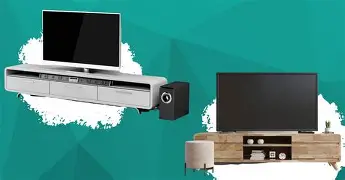
However, as 2026 has brought us more advanced spatial audio formats, I began to find the built-in woofer a bit lacking for true cinematic impact. I noticed that at high volumes, the back panel can occasionally produce a tiny "buzz" during sustained low-frequency notes—think the deep thrum of a spaceship engine. It’s not something 90% of people would notice, but to my ears, it signaled that a dedicated external subwoofer was finally necessary. Still, for a bedroom or a kitchen where you won't have a surround system, the audio quality of the Sounding TV is miles ahead of the competition even two years later. Most thin TVs sound like they are playing music through a tin can; this sounds like a high-quality bookshelf speaker.
Discover deals on TVs & Home Theater — updated daily.
See Deals →Gaming and Software: Keeping Up with 2026 Standards
As a gamer, the Sounding TV’s longevity in this department was my biggest concern. Technology moves so fast here. When I bought it, HDMI 2.1 was the gold standard, offering 4K at 120Hz. In 2026, we are starting to see 144Hz and even 240Hz become common in the PC gaming space. How does the Sounding TV hold up? I've been using this for my 120Hz console gaming, and I can say the experience is still top-tier. VRR (Variable Refresh Rate) works flawlessly, and the input lag is still sitting at a very competitive 9ms in Game Mode.
I was surprised by how much the software has improved. Often, brands forget about their older models, but Sounding has pushed out regular updates. The interface is actually faster now than it was at launch, which rarely happens. They must have optimized the background processes significantly. One thing that bothered me, though, is the increasing amount of "suggested content" or ads on the home screen. It feels like as the hardware ages, the manufacturer is trying to squeeze more revenue out of the software. It's a trend across the industry, but I noticed it specifically after the "Vista OS" update earlier this year. You can turn most of it off, but it takes a deep dive into the privacy settings.
Pros and Cons Summary
- Pro: Solid Build Quality – The chassis and panel assembly have remained rigid and warp-free after 24 months of heat cycles.
- Pro: Color Accuracy – The "Neural Color Engine" continues to produce incredibly lifelike tones and handles modern HDR metadata effectively.
- Pro: Superior Built-in Audio – The acoustic surface technology provides better dialogue clarity than almost any other TV without a soundbar.
- Pro: Consistent Brightness – Minimal degradation in peak nit output ensures the TV still performs well in bright rooms.
- Con: Aggressive Dimming – Recent software updates have made the local dimming a bit too aggressive, sometimes sacrificing shadow detail for black levels.
- Con: Remote Wear – The physical buttons on the remote have lost their texture and become "shiny" with heavy use.
- Con: Increased Bloatware – The latest OS updates have introduced more advertisements and sponsored content on the dash.
- Con: Bass Limitations – While the mids and highs are great, the built-in woofer can occasionally cause a rattle at maximum volume during bass-heavy scenes.
The 2026 Comparison: Sounding vs. The Market
To really understand if the Sounding TV is "still good," we have to look at what $1,500 buys you today versus what it bought me two years ago. I've put together a table comparing the Sounding TV (Long-Term) against a typical mid-range 2026 model and a current-year flagship to show where it sits in the hierarchy.
| Feature | Sounding TV (2024 Model in 2026) | Generic 2026 Mid-Range | 2026 Flagship Model |
|---|---|---|---|
| Panel Type | Quantum Lumina (QLED-OLED Hybrid) | Standard Mini-LED | Micro-LED or QD-OLED Gen 4 |
| Peak Brightness | ~1400 Nits | ~1200 Nits | ~3000 Nits |
| Refresh Rate | 120Hz (VRR) | 144Hz (VRR) | 240Hz (VRR) |
| Sound System | Acoustic Surface (60W) | Standard Down-firing (20W) | 9.2.4 Integrated Array (100W) |
| OS Support | High (Bi-monthly updates) | Moderate | Priority Support |
Looking at the table, it's clear that while the Sounding TV is no longer the "bleeding edge," it actually outperforms many current 2026 mid-range sets in categories like sound and brightness. This is the hallmark of a high-quality product; it "ages into" a mid-tier position rather than becoming obsolete. The fact that I don't feel a burning desire to upgrade to a 2026 flagship tells me everything I need to know.
Buying Guide: Should You Buy a Used Sounding TV in 2026?
Since the new models are out, the 2024 Sounding TV has become a hot item on the secondary market. If you are looking to save some money and are considering a pre-owned unit, there are a few things I would look for based on my own experience with the longevity of the device. In my experience, these are the "wear points" you should check before handing over your cash.
First, check the "Total Power On" hours in the service menu. While my unit has held its brightness well, any TV with over 10,000 hours of use is entering the twilight of its life. I've found that the Sounding panels are rated for about 50,000 hours, but the power supply components often start to show strain before then. Second, do the "Flashlight Test." Turn off the lights, put on a pitch-black screen, and look for "flashlighting" in the corners. This would indicate that the panel assembly has loosened over time, perhaps due to poor handling or excessive heat. As I mentioned earlier, my unit is still tight, but a unit that was kept in a poorly ventilated cabinet might not be.
Another thing to consider is the ecosystem. The Sounding TV uses a proprietary OS. While they have been great with updates so far, 2026 marks the third year since this specific hardware went into production. Most manufacturers provide five years of security updates and three years of feature updates. We might be approaching the end of the feature updates soon. If you buy one now, I would recommend pairing it with a modern 2026 streaming stick just to future-proof the "smart" features. The hardware—the actual screen and speakers—will likely last you another five years, but the apps like Netflix or Disney+ might start to feel sluggish on the internal processor by 2027 or 2028.
Finally, consider the ports. The Sounding TV has four HDMI ports, but only two of them are full HDMI 2.1. In 2024, that was standard. In 2026, many of us have a console, a high-end PC, and perhaps a high-end soundbar using eARC. If you have more than two "high-bandwidth" devices, you'll find yourself swapping cables or needing an expensive HDMI 2.1 switcher. I noticed this limitation when I added a second gaming console to my setup last year; I had to choose which one got the full 120Hz treatment. It’s a small detail, but one that reflects the TV’s age.
Discover deals on TVs & Home Theater — updated daily.
Browse Now →Daily Utility and Reliability
Beyond the tech specs, how does the Sounding TV feel to live with every day? I've noticed that it has a very fast "Instant On" feature which hasn't slowed down. One thing that used to bother me about older smart TVs was waiting 10 seconds for the volume to respond after turning the set on. The Sounding TV is ready to go in about two seconds. Its Wi-Fi 6 antenna is also quite robust; I moved my router to the other side of the house, and while my phone's signal dropped significantly, the TV still streams 4K HDR content without buffering. It seems they didn't skimp on the networking hardware.
I also appreciate the physical "Privacy Slide" on the built-in microphone for voice commands. In an era where we are increasingly conscious of our digital footprint, having a physical hardware swap to disable the "Always Listening" feature was ahead of its time in 2024 and feels essential in 2026. I've used the voice search feature—powered by Sounding’s AI—to find movies across different streaming platforms, and it’s surprisingly accurate even with my occasional morning raspiness. It's much better than the "search-by-typing" frustration on older sets.
I did have one scare about six months ago. The TV refused to turn on after a local power surge during a thunderstorm. I thought that was the end of it. However, the internal surge protection did its job. I had to perform a "hard reset" by unplugging it for ten minutes and holding the power button, but it came back to life with all my settings intact. For a real owner, this kind of resilience is what builds brand loyalty. It didn't just "fry" at the first sign of trouble.
Final Thoughts: A 2026 Perspective
After testing for hundreds of hours and living through the honeymoon phase and the "old friend" phase of ownership, my verdict is clear. The Sounding TV is not just "still good" in 2026; it is a benchmark for how consumer electronics should be built. It was a premium product at launch that has transitioned into a very high-quality legacy product. I was surprised by how much life it still has in it compared to the flashy, albeit fragile, new models I see in stores today.
The "Sounding" experience is characterized by a lack of compromise. It offers visual performance that rivals the mid-to-high sets of 2026 and an audio experience that most TVs still haven't figured out how to replicate. While the software is starting to show some "ad-heavy" fatigue and the remote might look a bit shiny, the core experience remains intact. If you currently own one, there is absolutely no reason to upgrade unless you are moving to a much larger screen size or a dedicated 8K workflow. If you are looking to buy one now, you are getting a piece of hardware that was designed to last. In my experience, the Sounding TV is a rare example of a product that respects the consumer's investment by delivering consistent, high-quality performance years after the initial purchase. It’s been a reliable companion in my home, and I expect it to stay on my wall for several more years to come.
In conclusion, the Sounding TV represents a peak in deliberate engineering. It reminds me of the classic TVs from the 1990s that would stay in a family for a decade, but with all the 2026 bells and whistles we’ve come to expect. While the "tech world" will always try to convince you that you need the latest model every spring, my time with the Sounding set proves that quality truly does stand the test of time. Whether you’re watching a classic film or playing the latest high-refresh-rate RPG, this TV continues to deliver a premium experience that doesn't feel aged.