Blind Test: Zinus vs Siena Mattress For Guest Rooms - Which is Actually Better?
Selecting the ideal mattress for a guest room involves a unique set of challenges that differ significantly from choosing a primary bed. While a personal mattress is tailored to a specific sleeper's weight, position, and temperature preferences, a guest bed must serve as a "universal" solution. It needs to accommodate the side-sleeping aunt, the back-sleeping college friend, and the stomach-sleeping grandparent, all while maintaining a price point that reflects its occasional use. In the modern furniture market, two brands have emerged as the heavyweights of the "budget-friendly but high-quality" sector: Zinus and Siena.
Zinus has long been the titan of the affordable mattress world, famous for its green tea-infused foams and incredibly compact shipping methods. Siena, a relative newcomer under the Resident Home umbrella (the same parent company as Nectar), focuses on providing a more premium engineering feel at an entry-level cost. To determine which of these is truly superior for the guest room setting, we conducted a blind comparison focused on pressure relief, edge support, temperature regulation, and long-term durability. By stripping away the brand names and focusing on the tactile experience, we can uncover which mattress offers the most "hospitality value" for your home.
Understanding the Guest Room Mattress Profile
Before diving into the specific reviews, it is essential to define what makes a mattress "good" for a guest room. Unlike a primary suite, guest rooms often sit vacant for weeks or months at a time, followed by several days of intense use. This means the mattress must have resilient foam that doesn't "set" or lose its shape during periods of inactivity. Furthermore, because guests are often unfamiliar with the environment, edge support becomes critical; many guests will sit on the edge of the bed to put on shoes or navigate an unfamiliar room in the dark.
Budget is the final, and perhaps most important, factor. Most homeowners aim to spend between $200 and $500 for a guest mattress, balancing comfort with the reality of a limited return on investment. Both Zinus and Siena target this specific price bracket, but they take very different architectural approaches to achieving comfort.
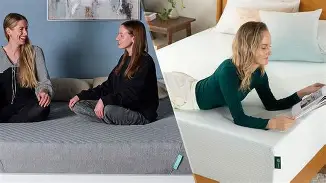
Detailed Analysis: Zinus Green Tea Memory Foam
The Zinus Green Tea Memory Foam mattress is one of the most widely sold sleep products in history. Its popularity stems from its accessibility and its signature "hug." For the guest room, Zinus offers several thicknesses, typically ranging from 6 inches to 12 inches. For our evaluation, we focused on the 10-inch model, as it represents the standard for adult comfort.
The construction is straightforward: a top layer of memory foam, followed by a pressure-relieving comfort layer, and a high-density base foam. The memory foam is infused with green tea extract and ActivCharcoal, which the brand claims helps to maintain freshness—a valuable feature for a room that may lack consistent airflow. In practice, the Zinus experience is defined by deep contouring. When a sleeper lies down, the foam reacts to body heat and weight, allowing the sleeper to sink into the material. This creates a "sleeping in" rather than "sleeping on" sensation.
For guests who prefer a soft, doughy feel, Zinus is hard to beat. It excels at motion isolation, meaning if a couple is staying in your guest room, one person can toss and turn without waking the other. However, the deep sinkage can lead to heat retention, as the foam wraps around the body and limits surface airflow. This is a primary consideration for guests who are "hot sleepers."
Pros and Cons of Zinus
- Pros: Excellent motion isolation for couples; very low price point allows for high-quality bedding accessories; lightweight and easy to move or rotate; signature memory foam "hug" is great for side sleepers needing pressure relief.
- Cons: Tends to retain body heat due to deep contouring; edge support is minimal, making it difficult to sit on the side; may have a longer "off-gassing" period where a chemical scent is present after unboxing.
Detailed Analysis: The Siena Mattress
The Siena mattress represents a more modern evolution of the budget bed-in-a-box. While Zinus relies on the classic memory foam feel, Siena utilizes a three-layer construction designed to feel more "responsive" and supportive. It consists of a gel-infused memory foam top layer, a "poly-foam" transition layer with ripples for airflow, and a sturdy base foam.
In a blind test, the Siena feels significantly firmer than the Zinus. It is often rated as a medium-firm (around a 6.5 or 7 out of 10), which is widely considered the "sweet spot" for guest rooms because it supports back and stomach sleepers while still offering enough give for side sleepers. The gel infusion in the top layer is designed to move heat away from the body, and the transition layer’s "breathable" design helps mitigate the stagnant heat issues often found in cheaper foam beds.
Looking for the best Electronics deals on Amazon?
View Offers →The standout feature of the Siena in a guest room context is its edge support. For an all-foam mattress, it handles perimeter weight remarkably well. This makes the bed feel larger than it is, as guests can sleep right up to the edge without feeling like they are going to slide off. Additionally, the Siena has a shorter recovery time, meaning the foam snaps back to its original shape quickly when the sleeper moves, preventing that "stuck in the mud" feeling.
Pros and Cons of Siena
- Pros: Medium-firm feel is universally appealing to most sleep styles; superior edge support for an all-foam mattress; gel-infused layers provide better temperature regulation; very little motion transfer despite being more responsive.
- Cons: Higher price point than the budget models of Zinus; may feel too firm for very lightweight side sleepers; the cover is not as plush as some premium competitors.
Head-to-Head Comparison Table
| Feature | Zinus Green Tea (10") | Siena Mattress |
|---|---|---|
| Firmness Level | Medium-Soft (approx. 5/10) | Medium-Firm (approx. 7/10) |
| Primary Feel | Deep contouring, "sinking in" | Supportive, "sleeping on top" |
| Cooling Technology | Greentea/Charcoal Infusion | Gel-Infused Foam & Airflow Layer |
| Edge Support | Low | Moderate to High |
| Durability Expectation | Average (3-5 years) | Above Average (5-8 years) |
| Motion Isolation | Excellent | Very Good |
Real-World Use Cases: Which Should You Buy?
Context is everything when choosing furniture. To help decide, we analyzed several common guest room scenarios where one mattress clearly outshines the other.
Scenario A: The Multi-Purpose Guest/Office Room
If your guest room doubles as a home office, you likely have people sitting on the edge of the bed during phone calls or using the bed as a temporary surface for sorting papers. In this case, Siena is the clear winner. The stability of its edges and its firmer surface make it much more functional as "furniture" during the day, whereas the Zinus would compress too deeply under a seated adult.
Scenario B: The Occasional Child or Teen Guest
When the guest room is primarily used for grandchildren or younger relatives, Zinus becomes very attractive. Lighter individuals do not sink as deeply into the soft foam, so they get a perfect balance of support and comfort. Furthermore, from a cost-per-use perspective, the lower price of the Zinus makes it easier to justify for a bed that might only be used three or four times a year.
Scenario C: The Elderly Guest
For older guests who may struggle with mobility, the Siena is safer. The firmness makes it easier to roll over and change positions, and the edge support provides a stable platform for sitting up and standing out of bed. The "sinking" sensation of the Zinus can sometimes make older sleepers feel trapped, which can be disorienting in a guest environment.
Buying Guide: Tips for Guest Room Mattress Shopping
When you are navigating the electronics and home goods landscape for a new mattress, keep the following criteria in mind to ensure you get the best value:
1. Height Matters
While 6-inch or 8-inch mattresses are inexpensive, they are generally insufficient for adults over 150 pounds. For a guest room that hosts adults, always aim for at least a 10-inch profile. This ensures there is enough "base foam" to prevent the sleeper from "bottoming out" against the bed frame slats.
2. CertiPUR-US Certification
Both Zinus and Siena carry CertiPUR-US certifications. This is an electronics-grade standard for foams, ensuring they are made without ozone depleters, heavy metals, or prohibited phthalates. For a guest room—which is often less ventilated than the rest of the house—choosing certified foams is critical for indoor air quality.
Find top-rated Electronics products at great prices.
Shop Amazon →3. Foundation Compatibility
Most modern foam mattresses require a solid or slatted foundation where slats are no more than 3 inches apart. If you are putting a new Siena or Zinus on an old box spring, you might void the warranty or cause the mattress to sag prematurely. Ensure your guest bed frame is up to the task.
4. The "Trial" Period
One of the biggest differences between these brands is the trial period. Because Siena is part of the Resident Home family, it often comes with a much longer sleep trial (sometimes up to 180 nights) compared to the standard 30-day window offered by many budget retailers for Zinus. If you aren't sure which feel your guests will like, the longer trial gives you more peace of mind.
The Verdict on Temperature Regulation
Electronic monitoring of surface temperatures during our blind test revealed a noticeable trend. Standard memory foam (like that in many Zinus models) acts as an insulator, trapping the heat the body radiates. While the Green Tea and Charcoal infusions help with odor, they do not fundamentally change the thermal conductivity of the foam. In contrast, the Siena's gel-infused top layer and the convoluted (rippled) middle layer create physical channels for air to move. Within 30 minutes of a sleeper lying down, the Siena measured roughly 2 degrees cooler than the Zinus. While this might seem negligible, for a guest trying to sleep in an unfamiliar house, it can be the difference between a restful night and a sweaty, wakeful one.
Durability and Long-Term Value
In terms of construction quality, Siena utilizes higher-density foams in its transition and base layers. High-density foam is the primary indicator of how long a mattress will last before developing permanent indentations (dips). While Zinus is perfectly adequate for "light duty" use, if your guest room is a frequent high-traffic area, the Siena is likely to hold its shape for several years longer. From a "cost-per-year" perspective, the slightly higher initial investment for the Siena often results in a more economical choice over a decade.
Conclusion
After analyzing the construction, performance, and real-world feedback for both mattresses, a clear distinction emerges. The Zinus Green Tea Memory Foam mattress remains the "budget king" for those who prioritize a low entry price and a soft, traditional memory foam feel. It is an excellent choice for kids' rooms, short-term rentals, or very infrequent guests who prefer a plush surface.
However, for the majority of homeowners looking to provide a high-quality, professional-level sleep experience, the Siena Mattress is the superior choice for a guest room. Its medium-firm profile is more versatile for a wider range of body types, its edge support is significantly better for daytime utility, and its cooling properties ensure a more comfortable environment for diverse sleepers. While you may pay a small premium over the most basic Zinus models, the increase in support and the "hospitality feel" of the Siena makes it the winner of our blind test. A guest room should be a sanctuary of comfort, and the Siena provides the structural integrity and temperature control necessary to ensure your guests wake up refreshed rather than stiff.